What Longmont's Prospect New Town Premium Is Actually Buying
August 13, 2026
August 13, 2026
Drive south into Prospect New Town on U.S. 287 and one of the first streets you cross is Tenacity Drive. It isn't a marketing flourish. The developer named it for the fight his team waged to get the neighborhood built at all, and that fight still shapes what a Prospect address costs today. If you've pulled up Longmont's citywide median and then found Prospect listings running well past it, the gap isn't really about square footage. It's about a covenant that almost didn't survive its own approval process, and a supply of land that is now effectively gone for good.
Kiki Wallace bought the 80-acre tree farm from his own family in the early 1990s. He disliked conventional suburban development and, after reading a Wall Street Journal profile of architect Andrés Duany, hired the firm of Duany Plater-Zyberk & Company, the same team behind Seaside, Florida, and Kentlands in Gaithersburg, Maryland, two of the country's best-known New Urbanist communities. Wallace and Longmont developer Dale Bruns spent 1994 trying to convince the city that narrow streets, rear alleys, and front porches facing sidewalks could work in Colorado. Longmont's own fire and police departments objected to the street widths. The Colorado Department of Transportation objected to the number of curb cuts. The project's density didn't match the open space requirements on the books at the time. The plan survived anyway. In October 1995, the Longmont Planning Board granted the necessary variances and approved the project unanimously, with then-mayor Leona Stoecker backing the effort, on the stated grounds that this is what people want. That approval, according to the neighborhood's documented history, called for roughly 585 units across 340 lots and nine small parks woven through the site.
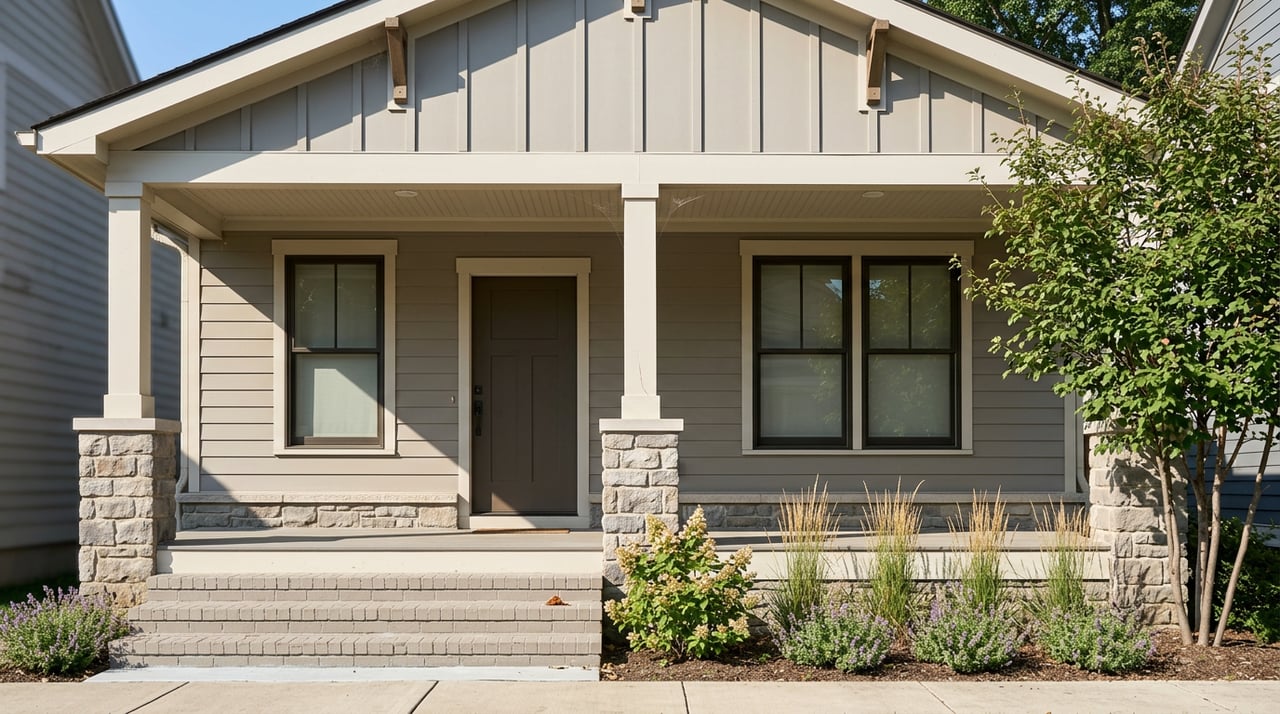
None of that history is decoration. It is the reason Prospect looks and functions differently than the rest of Longmont, and it is the reason building and maintaining a home there costs more than building the same square footage somewhere without the covenant. Garages sit off rear alleys instead of fronting the street, which means every lot needs alley infrastructure a standard subdivision skips. Streets are narrower than city standard, which means different utility placement and maintenance patterns. The nine small parks that break up the blocks aren't optional green space, they're land that never becomes a taxable lot. None of this shows up as a line item on a listing sheet. It shows up in the price.
Longmont's broader market has been loosening through the middle of 2026. Single-family inventory reportedly hit an eleven-year high by the end of June 2026, with roughly 300 homes listed and buyers typically getting a home under contract in around 40 days from March through June. Zillow's home value index put the citywide typical home value at $557,628 as of June 30, 2026, down 2.2 percent over the prior year, and by July 2026 the median list price had settled at $599,000, down 9 percent from a year earlier, with homes spending a median of 63 days on market. Over the three months ending May 2026, the citywide median sale price was $555,000, and 382 homes changed hands in that single month.
Prospect doesn't move on the same clock. Over the three months ending March 2026, the neighborhood's median sale price was $925,000, up 5.1 percent year over year. Only three homes sold in the entire month of March 2026, up from just one home in March 2025. Trailing twelve-month figures pulled from separate 2026 snapshots of the same neighborhood put the median anywhere from $962,475 to $999,950, a premium of roughly 60 to 80 percent over the citywide number depending on which window you compare, in a citywide market that is currently loosening in the buyer's favor.
The volume is why the figures don't agree with each other from one snapshot to the next. One reading showed Prospect's average sale price down nearly 46 percent year over year for the most recent single month measured, while the rolling three-month median showed a 5.1 percent gain, and three separate trailing twelve-month readings pulled across 2026 landed at $962,475, $965,005, and $999,950, each a plausible number and none of them wrong exactly. That's what happens when a neighborhood might close one sale in a quiet month and four in a busy one. A single high-end closing or a single condo sale can swing an average by double digits, and a rolling twelve-month median can look completely different from a rolling three-month one. Compare that to the citywide market's 382 sales in a single month in May 2026, where enough volume exists for the noise to average itself out. The lesson for a buyer comparing Prospect to the citywide median isn't which number to trust. It's that a market this thin doesn't produce a stable number at all, and any single reading deserves a second look against the underlying sale count.
| Metric | Prospect New Town | Longmont Citywide |
|---|---|---|
| Median sale price | $925,000 (3 months ending March 2026) | $555,000 (3 months ending May 2026) |
| Trailing 12-month median | $962,475 to $999,950 (varies by 2026 snapshot) | not comparable at this scale |
| Homes sold | 3 in March 2026 (up from 1 in March 2025) | 382 in May 2026 |
| Days on market | 28 to 97 days depending on the 2026 window measured | 41 to 63 days (May-July 2026) |
| Inventory trend | Too few listings to track meaningfully | 11-year high in single-family inventory by June 2026 |
A premium built on thin supply usually erodes once more inventory arrives. Prospect's is unlikely to, because the inventory pipeline is closing rather than opening. In February 2023, Longmont's Planning and Zoning Commission approved an amendment for the neighborhood's fourth filing, a 4.8-acre site west of Main Street and south of Pike Road, adding 180 units made up of apartments, a mix of one and two bedroom units, and 12 three-bedroom duplexes. City staff described this parcel, aside from one small remaining sliver, as the last significant undeveloped land from the original 1990s plan. Longmont's planning manager at the time framed the approval as staying true to the founding goal of treating pedestrians as equal to vehicles while preserving the neighborhood's open space commitments, and the commission approved it unanimously after the design was revised to reduce projected daily traffic trips and add parking beyond the city's minimum requirement.
That approval matters for anyone comparing prices today. The units it added are apartments and duplexes, not the detached single-family product that anchors the top of Prospect's market. The scarcity of that detached stock doesn't ease. If anything, the neighborhood is now built out in the way its founders intended from the start, which means the supply of the exact product driving the premium has a hard ceiling that the rest of Longmont, still adding new subdivisions on its edges, does not share.
Walk from most addresses in Prospect and you're close to a working town center rather than a commuter cul-de-sac. Locals frequent Cavegirl Coffeehouse for coffee, and Babette's, Carciofi, Pine Pizzeria, and Laguna Mexican Restaurant round out the dinner options within the same few blocks. Coffman Children's Park, Left Hand Creek Park, and Kanemoto Park, home to the neighborhood's Tower of Compassion, sit within the small-park network the original plan called for. This is the daily texture the covenant was built to protect, and it's a meaningfully different way to live than a standard Longmont subdivision, whether or not that difference is worth the premium to any given buyer.
If you're weighing a Prospect listing against something at Longmont's citywide median, the honest framing is that you're not comparing two houses of similar construction at different price points. You're comparing a covenant-governed, land-constrained micro-market to a much larger, currently loosening citywide one. Before making an offer in Prospect, ask for the architectural review board's current guidelines rather than assuming they mirror a standard HOA, since the design review here has real teeth by design. If you're selling in Prospect, understand that pulling comps is harder than it looks given how few transactions clear each quarter, and a pricing strategy built on a single recent sale can miss the mark badly in either direction.
Is there still room for new single-family construction in Prospect? Effectively no. The 2023 approval covering the last significant undeveloped parcel added apartments and duplexes rather than detached homes, and city planners described it as the remainder of the original footprint.
Why do Prospect's days-on-market and price figures swing so much from one reporting period to the next? Volume. With as few as one to three sales in a given month, a single transaction can move the average or median by a wide margin, and different reporting windows, whether a single month, a rolling three months, or a rolling twelve months, can show very different numbers for the same underlying handful of closings. Treat any single figure as a data point, not a trend, until you can see it against the sale count behind it.
If you're trying to figure out whether a Prospect premium fits your budget, or whether a different Boulder County suburb gets you closer to what you actually want without paying for a covenant you may not need, Bethany Sartell can walk through the comparison with you directly. Schedule a consultation and get your complimentary home valuation before you decide where that premium makes sense for your move.
Get assistance in determining current property value, crafting a competitive offer, writing and negotiating a contract, and much more. Contact me today.