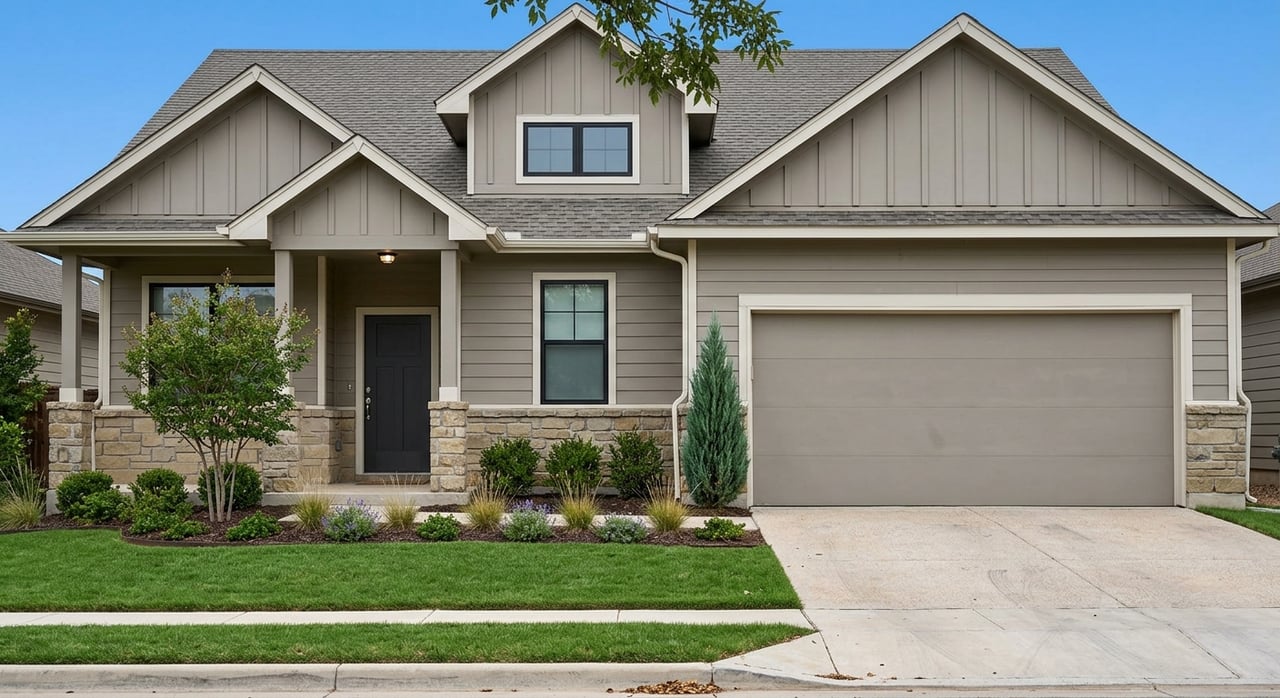
Compare New Construction Homes in Erie Communities
May 28, 2026
May 28, 2026
Buying new construction in Erie can feel exciting right up until every community starts to sound the same. Clubhouses, trails, model homes, design options, future retail, coming-soon amenities, and builder incentives can blur together fast. If you want to make a smart decision, you need a way to compare what matters now and what could affect your monthly cost, daily life, and future resale later. Let’s break down how to compare Erie communities with more confidence.
Erie continues to attract buyers who want a newer home in a growing Front Range location with access to Denver, Boulder, and the I-25 corridor. The Town of Erie’s 2025 community profile lists 40,183 residents in 2024, 14,903 households, 1,500 acres of parks and open space, and 70 miles of trails, with a 2030 population estimate of 48,000.
That growth helps explain why so many buyers are looking closely at new neighborhoods here. It also means you are often buying into a community that is still evolving, with future phases, road work, trail connections, and commercial development still in progress.
A beautiful model home can pull your attention inside, but the lot is just as important. In Erie, where many communities are still being built out, the position of your home and the land around it can shape sunlight, privacy, and views for years.
The U.S. Department of Energy notes that south-facing windows tend to capture more winter sun and less summer heat, while east- and west-facing openings may create more glare and unwanted heat gain. It also recommends looking at what could eventually be built to the south of the lot, since future construction or tree growth can affect solar access.
A premium lot can be worth it, but only if you understand what you are paying for. A lot that feels open today may feel very different after nearby phases are completed.
Not all builders serve the same buyer, even in the same town. Some focus on personalization, some on attached housing, some on larger master-planned settings, and some on higher-end build-to-order options.
In Erie, current and upcoming examples include Oakwood at Erie Highlands, Trumark’s upcoming Erie Highlands townhomes, KB Home in Canyon Creek, Lennar at NorthSkye, Toll Brothers at Erie Town Center, Southern Land at Westerly, and Community Development Group communities such as Colliers Hill and Erie Commons. That range gives you choices, but it also means you should compare the product carefully.
The Federal Trade Commission notes that new-home warranties often do not cover every out-of-pocket cost tied to a defect or repair. It also notes that builder warranties commonly exclude items such as appliances and minor cosmetic issues. In practical terms, that means the written warranty and the actual service process matter more than a polished sales presentation.
This is one of the biggest areas where Erie new-construction buyers can get surprised. Two homes with similar prices can have meaningfully different monthly carrying costs depending on HOA dues and metro-district levies.
The Town of Erie explains that metro districts are quasi-governmental entities with taxing authority, while HOAs are private entities without taxing power. A community can have both. In general, the metro district handles infrastructure, and residents pay that cost through a separate mill levy.
Erie’s posted metro-district information shows that levies can vary sharply by community and filing. Examples in the town’s published information include Colliers Hill, Daybreak, and Bridgewater districts in the mid-50s mills, Erie Highlands districts ranging from 20 to 78.328 mills, and Westerly districts in the mid-60s mills.
The Town of Erie also warns that for newly constructed homes, the metro-district levy may not appear on the first tax bill because county valuation often happens within the first year. In many cases, that levy shows up one to two years later.
This is not a detail to leave for later. It can directly affect affordability and your comfort level with the long-term payment.
Amenities can shape both your daily experience and how a home may appeal to future buyers. Still, there is a big difference between amenities that are already built and amenities that are still part of a future plan.
Erie offers a wide range of community setups. Erie Highlands advertises a 4,000-square-foot clubhouse, pool, parks, trails, and a neighborhood school. Colliers Hill is planned for 15 miles of trails and is getting a new pedestrian bridge to Historic Downtown Erie. Westerly is an 800-acre community planned for about 3,000 homes, a village center, two amenity centers, and nearly half the land devoted to pocket parks, open space, and trails.
Other communities also offer distinct appeal. NorthSkye is planned with four home collections, a future onsite recreation center, pocket parks, and trails. Toll Brothers at Erie Town Center emphasizes build-to-order homes with walkability to Historic Old Town Erie. Erie Commons is tied closely to Erie’s civic core and includes donated land for the recreation center, park, and library, plus neighborhood retail.
Features like walkability, connected trails, and access to future retail areas may support broader buyer appeal later, though they do not guarantee resale performance. In Erie, planned trail connections between Coal Creek Regional Trail, Erie Highlands, Sunset, and Westerly, along with the Colliers Hill bridge project and Town Center’s future retail core, are examples of improvements that may matter over time.
In a growing town, the neighborhood you tour today may not be the neighborhood you live in for the first year or two. Road work, utility work, trail construction, and later building phases can affect traffic flow, noise, dust, and even move-in timing.
That is especially relevant in Erie because active development continues across town. The Town Center area, a 390-acre planning area centered at Erie Parkway and County Line Road, includes a retail, civic, and affordable-housing vision, and Ranchwood at Town Center is already under construction with trail extensions and a pedestrian underpass planned to connect the development to the Erie Community Center campus.
Before signing, it is smart to check current town construction alerts and ask the builder for a phase map. That gives you a clearer picture of what your first months in the neighborhood may actually look like.
If you are visiting several neighborhoods in one weekend, use the same scorecard each time. That helps you stay focused on facts instead of model-home impressions.
When you compare communities this way, patterns become easier to spot. One neighborhood may offer lower initial pricing but higher district costs. Another may offer stronger trail access or a more established amenity package. A third may be the best fit because the lot and builder process align better with your goals.
New construction often looks straightforward, but there are many decisions hiding behind the sales office conversation. The right community is not just the one with the nicest model. It is the one that fits how you want to live, what you want to spend, and what you understand about the property long term.
A calm, local comparison process can help you ask better questions before you commit. That is especially valuable in Erie, where metro-district structures, future phases, amenity timing, and lot-specific factors can vary a lot from one community to the next.
If you want help comparing new-construction options in Erie, Bethany J Sartell can guide you through the tradeoffs, due diligence, and decision-making process with clear local insight.
Get assistance in determining current property value, crafting a competitive offer, writing and negotiating a contract, and much more. Contact me today.